
Did you know? · No. 32 · Trivia ·
A leap-day date became February 29, 2013—and disrupted Azure
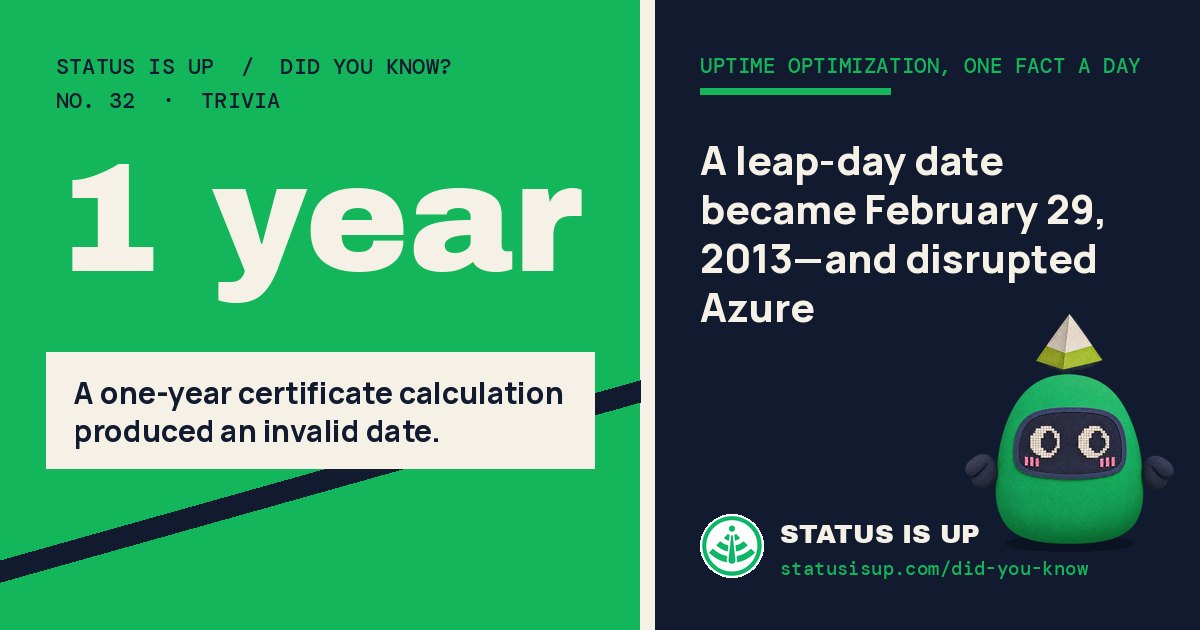
On February 29, 2012, Windows Azure’s Guest Agent tried to create one-year transfer certificates for new virtual machines. Its code got the end date by adding one to the current year. On leap day, that became February 29, 2013—a date that does not exist—so certificate creation failed. The issue began at 00:00 UTC.
The partial outage affected Azure Compute and several dependent services; Storage and SQL Azure were not affected. The lesson reaches far beyond cloud platforms: date rules sit inside sign-ins, renewals, reports, trials and scheduled jobs. A calendar assumption can block a normal operation exactly when your team is least expecting it. Cover the edges before customers find them.
Try this on your site
This week, set a test clock to February 29 and December 31. Run sign-in, renewal, expiry and scheduled-job flows, then fix any code that builds dates by changing fields manually.
Share this fact
Each fact is checked against the primary sources listed. Spotted an error? Email the Status Is UP team. Status Is UP helps owners improve their sites; it is not an uptime monitor. For live outage status, see Status Is Down.