
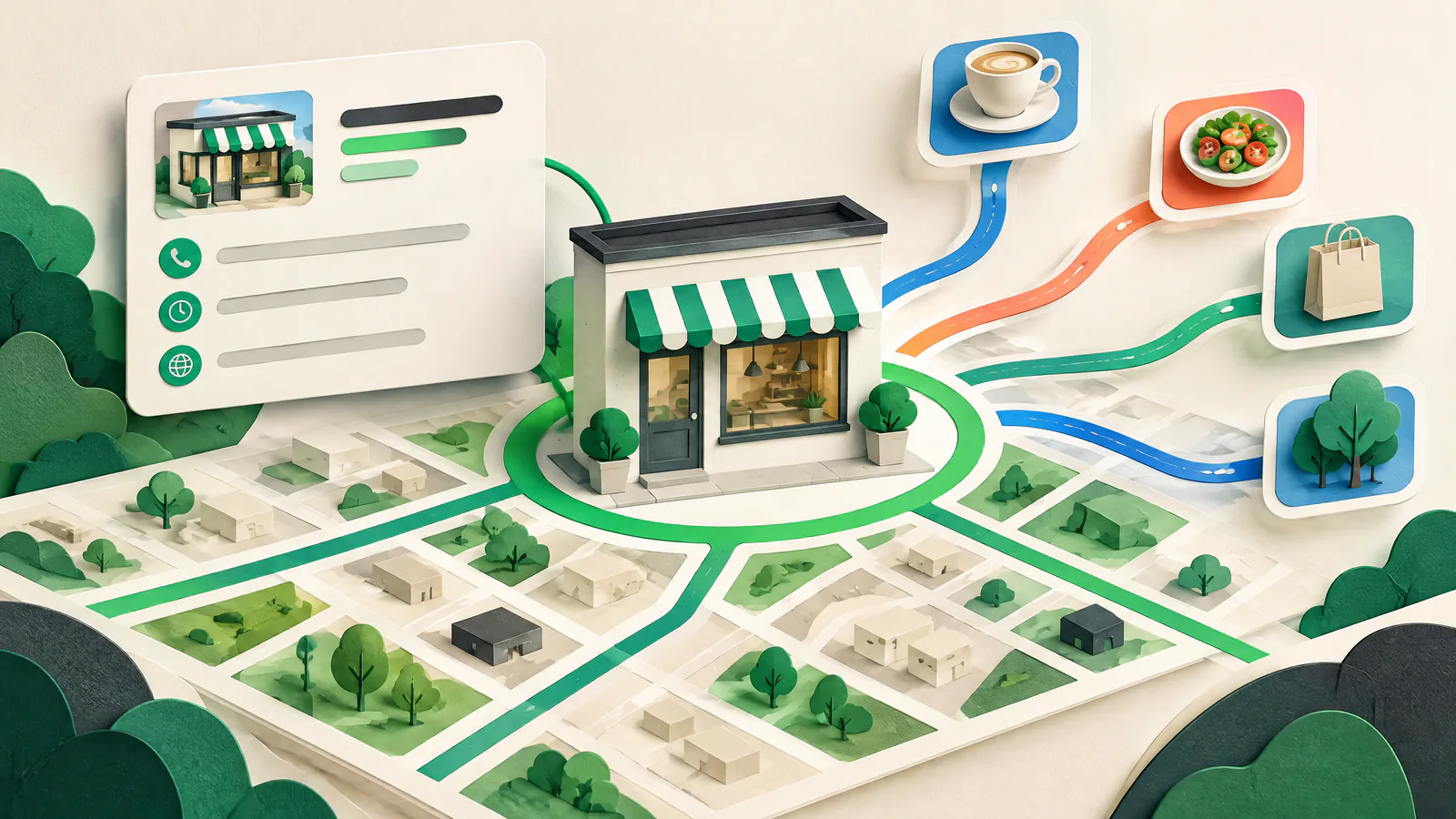
Keep a single source of truth for business identity
Create an owner-approved record for every genuine location or service area. Include the customer-facing name used on signs, authoritative phone number and URL, address format, normal and special hours, category, core services, and access details. Use it whenever a move, holiday closure, phone change, or rebrand occurs.
Keep essential facts aligned on the website, Google Business Profile, booking tool, social accounts, and directories the business manages. Normal formatting differences matter less than conflicting facts. Assign one person to approve changes and separate shared brand data from branch-specific information so an update cannot overwrite another location.
Use the customer-facing name, not a string of services, neighborhoods, or marketing claims.
Record who changed a critical field, why, and when; update special hours before closures.
Maintain a truthful Google Business Profile
Confirm eligibility before creating or changing a profile. Google says an eligible business makes in-person contact with customers during its stated hours; online-only businesses and lead-generation companies are among its ineligible examples. The business owner should retain ownership, while staff or agencies can receive documented access.
After verification, publish the actual address when customers can visit it, accurate normal and special hours, a fitting category, authoritative phone and website, and only real features or services. Treat the profile as operational customer information, not an ad. Google recommends complete, accurate information, reviews responses, and photos to help customers understand a business; none guarantees placement.
Do not create a profile for a virtual office, mailbox, or a city without an eligible presence.
Keep recovery details under business control and review manager access after supplier changes.
Give every real location page a customer purpose
A location page should answer practical questions: what this branch or service team does, its true address or service arrangement, hours, access or arrival information, services available there, and the next action. Add checkable local detail such as parking instructions, appointment rules, or a service constraint. Link to it from a logical location finder or navigation path.
Do not clone a template and replace city names. Google defines doorway abuse as pages made for similar queries that lead customers to less useful intermediate pages, including city pages that funnel users to one page. If a business serves an area without a public location, say so and explain delivery of service rather than implying a storefront.
A customer should be able to make a different or better decision from this page than from the main site.
For a real location, LocalBusiness markup can describe facts such as name, address, and opening hours. Keep it consistent with visible content.
Validation does not promise a rich result or higher ranking.
Request reviews honestly and respond safely
Ask appropriate recent customers for an honest review through a post-service message, receipt, or Google review link or QR code. Do not offer discounts, gifts, refunds, or other incentives for a review, a changed review, or removal of negative feedback. Google calls this prohibited fake engagement. Do not filter requests to people expected to be positive.
Set a short response process. When a public reply helps, acknowledge the feedback, state only facts you can support, and move account-specific resolution to a private channel. Do not publish private information. Flag a review only when it violates policy, and use genuine recurring themes to improve the operation or website.
Ask for an honest account of the experience, not a rating or prescribed wording.
Do not confirm transaction, health, account, or contact details in a public reply.
Earn local references from real relationships
Local links are links to the site from organizations, partners, events, suppliers, local media, professional bodies, or community groups. Google identifies links from websites and review volume as information that can contribute to local prominence. The practical response is not bought placements or irrelevant exchanges; it is ensuring genuine relationships can accurately reference the business.
Correct existing references first. Give a legitimate partner the official URL and factual description for a sponsorship, event, or listing it independently chooses to publish. Prioritize pages a real customer could use. Do not build separate city domains or websites merely to capture queries.
Link to the page that fulfils the referrer’s promise: location, service, event, or homepage.
Decline placements requiring misleading copy, fake endorsements, or an invented local presence.
Measure the customer path and remediate friction
Use Google Search Console to review clicks, impressions, click-through rate, average position, queries, and pages across comparable periods. Filter to location pages when useful and record the change before interpreting a result. Search results vary by time, location, device, and search history, so a manual search is only a spot check. Pair search data with responsibly measured business outcomes such as qualified calls, bookings, or forms.
Then test the mobile path: load the page, tap phone and directions links, submit a safe test request, and confirm the next step. Status Is UP work is proactive uptime optimization and remediation: reduce unnecessary page or image weight, correct broken forms and links, keep launches reversible, and fix faults before they interrupt local intent. It does not replace profile eligibility or truthful information.
Log the change, date, affected URL, expected action, and comparison window.
Fix incorrect directions, unavailable contact routes, failed forms, and pages that cannot load reliably first.